
Table of Contents
- What Separates Premium Sports Hats From Standard Caps
- The Cost-Per-Wear Breakdown: Doing the Math
- How to Spot Authentic Sports Caps Before You Buy
- Where to Buy Authentic Sports Caps
- How to Clean Premium Sports Hats Without Ruining Them
- Comfort, Fit, and Performance Features That Justify the Price
- Frequently Asked Questions
Last Updated: September 27, 2026
What Separates Premium Sports Hats From Standard Caps
Premium sports hats are caps built with higher-grade fabrics, reinforced construction, and stricter quality control than standard promotional or mass-market caps. That difference shows up in how the hat fits on day one and how it holds its shape after a year of wear.
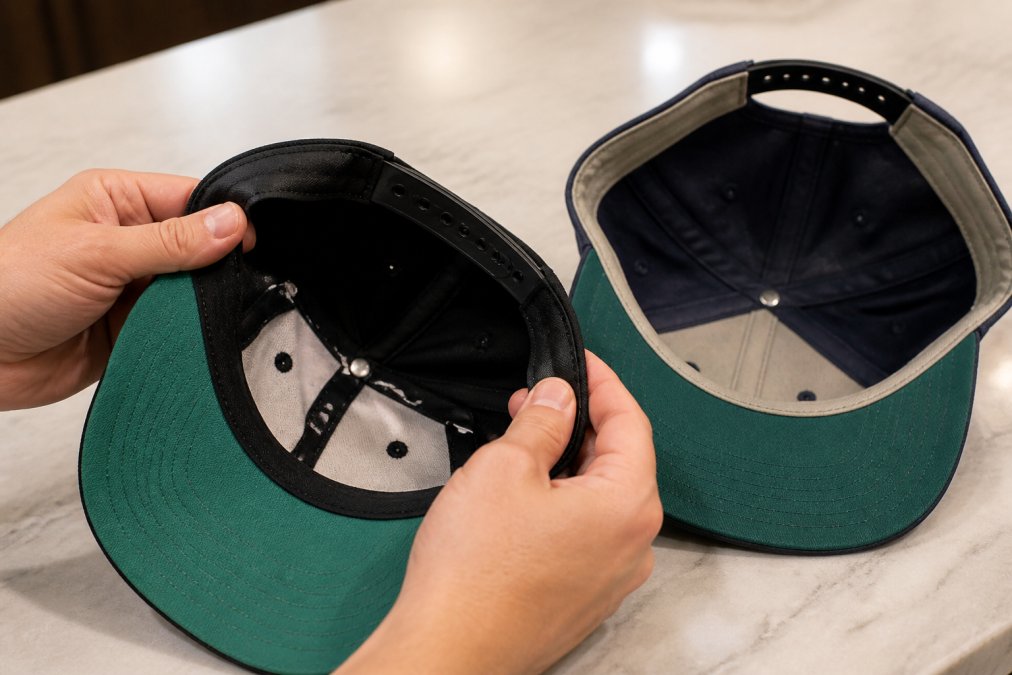
This guide from The Vault breaks down whether that price gap is worth paying. A common approach is to compare two hats side by side: a standard cap and a premium one. The gap becomes obvious fast. Standard caps often use thin cotton twill with glued seams and a flimsy plastic snapback. Premium caps typically use heavier fabric, taped seams, and structured panels that resist sagging.
Materials and Fabric Weight
Fabric weight is the clearest signal of quality. Standard caps usually run light and thin, which means they crease easily and lose shape. Premium sports hats often use heavier cotton-poly blends or performance fabrics with moisture-wicking properties. These fabrics resist sweat stains, hold color longer, and feel more substantial without adding heat.
Material composition matters as much as weight. A cotton-poly blend tends to balance breathability with durability. Performance fabric adds stretch and quick-drying behavior, which helps on humid game days.
Construction Standards and Structural Integrity
Construction is where cheap caps fall apart. Look for taped seams, reinforced eyelets, and a structured front panel. These details keep the crown from collapsing and the brim from warping.
Stitching quality is the giveaway. Even, tight stitching along the brim and panels signals a cap built to last. Loose or uneven stitching usually means the cap will fray within months.
The Cost-Per-Wear Breakdown: Doing the Math
Cost-per-wear is the price of a hat divided by how many times you actually wear it. The formula is simple:
Cost per wear = Purchase price ÷ Total wears over the hat's life
Most buyers skip this step and compare sticker prices instead, which is exactly why premium headwear looks expensive at the register and cheap over time. Run the numbers on a realistic scenario and the picture flips.
Say a standard cap costs $25 and survives one season of regular wear, roughly 40 outings before the brim warps, the sweatband stains through, or the crown sags. That is $25 ÷ 40, or about $0.63 per wear. Now say a premium sports hat costs $50 and holds its shape and color for three years of the same rotation, about 120 wears. That is $50 ÷ 120, or roughly $0.42 per wear. The premium hat costs twice as much upfront and still comes out cheaper per outing.
Stretch the premium hat to four years of regular wear and the gap widens further. At 160 wears, $50 ÷ 160 lands near $0.31 per wear, less than half the standard cap's rate. The break-even point sits around 80 wears: once you pass that, the premium hat has already paid back its price premium in per-use terms.
| Factor | Standard Cap | Premium Sports Hat |
|---|---|---|
| Typical upfront price | Lower | Higher |
| Typical lifespan | 1 season | 3-4 years |
| Estimated wears | ~40 | ~120-160 |
| Cost per wear | ~$0.63 | ~$0.31-$0.42 |
| Shape retention | Poor | Strong |
| Sweat resistance | Low | High |
| Resale or collectible value | Rare | Common |
The math only favors premium when you actually wear the hat. If you pull a cap out a few times a year, the cheap option wins on cost-per-wear because you never accumulate enough wears to amortize the higher price. The premium case is strongest for a daily driver, a hat that lives on your head through commute, errands, and weekends. That is where the per-wear gap compounds.
One caveat: cost-per-wear assumes the premium hat genuinely lasts longer. That depends on the materials and construction covered above, not on the label. A premium-priced hat built with the same glued seams and flimsy plastic snapback as a budget cap will not deliver the lifespan the math requires.
How to Spot Authentic Sports Caps Before You Buy
Authentic sports caps show consistent stitching, clean embroidery, and accurate tags. Fakes cut corners in exactly these places, which makes them easier to catch than most buyers expect.
Start with the embroidery. Real caps have dense, even stitching with no loose threads or crooked lettering. Counterfeits often have thin, patchy embroidery that looks flat up close.
Melin Double Drink Flexfit 110 Snapback →
Stitching Quality and Logo Embroidery
Run your eyes along the brim and panel seams. Authentic caps use tight, uniform stitching. Check the logo itself: genuine embroidery has depth and clean edges, while fakes look shallow or slightly misaligned.
Tags, Labels, and Sizing Consistency
Authentic caps carry proper interior tags with brand information and sizing. Sizing consistency matters too. A legitimate premium cap labeled one size fits most will actually fit a predictable range. Fakes often run small or stretch unevenly.
Where to Buy Authentic Sports Caps
The safest source for authentic sports caps is a retailer with a clear return policy and verifiable product listings. That protects you if the fit or finish isn't right.
The Vault carries a curated selection of premium sports-themed headwear for fans across multiple leagues, with collections for both men and women. Every listing is a real product with real photos, so you know what arrives.
How to Clean Premium Sports Hats Without Ruining Them
Premium sports hats need gentler care than standard caps because the same features that justify the price, structured panels, taped seams, dense embroidery, natural fibers, are the first things harsh cleaning destroys. Hot water shrinks wool, machine agitation collapses a structured crown, and a dryer's heat can melt the glue that holds a brim's shape. Match the method to the material and the hat lasts.
Match the Method to the Fabric
Cotton and cotton-poly blends (the most common premium cap fabric) tolerate cool water and mild soap well. Spot-clean with a soft cloth, then air-dry. Avoid hot water, which can shrink cotton and fade dyed panels.
Step-by-Step Care
- Spot-clean stains with a soft cloth and mild soap before they set.
- Use cool water only, never hot.
- Scrub the sweatband gently with a soft brush; this is where sweat, oils, and salt concentrate.
- Air-dry the cap on a clean towel, reshaping the crown by hand.
- Never put a structured cap in a washing machine or dryer.
Why Each Step Protects the Price You Paid
Textile durability and care guidance from the American Cleaning Institute
Comfort, Fit, and Performance Features That Justify the Price
Comfort is where premium sports hats earn their keep. A stretch-fit sweatband, ergonomic fit, and breathable panels turn a cap you tolerate into one you reach for daily.
Frequently Asked Questions
How can you tell if a sports hat is premium quality?
Check the stitching first. Premium sports hats use tight, even stitching with no loose threads, and the embroidery on logos sits flat without puckering. Look at the sweatband: a quality cap uses a moisture-wicking band, not thin polyester. Feel the fabric weight and check for eyelet reinforcement at the crown. The brim should hold its curve without feeling flimsy. These signs separate a cap built to last from one that loses its shape after a few wears.
Do premium sports hats actually last longer than cheap ones?
They do when the materials and construction support it. A cap with a cotton-poly blend and moisture-wicking sweatband, like the Melin Double Drink Flexfit 110 Snapback at $49.99, resists sweat damage and shape loss better than a basic cotton cap. Cheaper caps often use thinner fabric and weaker stitching that break down faster. The cost-per-wear math favors the premium option if you wear it regularly for a year or more.
Are branded premium hats worth the investment for daily wear?
For daily wear, yes. A cap you wear five days a week gets sweat, sun, and repeated handling. Premium materials like moisture-wicking sweatbands and reinforced panel construction hold up under that kind of use. The Melin Double Drink Flexfit 110 at $49.99 is built for exactly this: a stretch-fit sweatband and performance fabric that handle daily rotation. A cheaper cap worn daily often shows wear and tear within months.
What is a reasonable price range for a high-quality sports hat?
At The Vault, premium sports caps start around $49.99 for a performance snapback like the Melin Double Drink Flexfit 110. Designer and luxury options run higher, from $79.99 for a Supreme Big Logo Beanie to $750 for a Prada Fur Trapper Hat. The right price depends on how you plan to wear it. For game day and daily rotation, the $50 to $150 range covers caps with moisture-wicking sweatbands, quality embroidery, and durable construction.
How do I clean a premium sports hat without damaging it?
Hand wash with cold water and a mild detergent, then air dry. Never put a structured cap in the washing machine or dryer; heat breaks down the brim rigidity and shrinks the sweatband. For spot cleaning, use a soft cloth with diluted detergent and blot gently. For knit beanies like the Heron Preston NASA Logo Beanie, hand wash in cold water and lay flat to dry to keep the ribbed knit from stretching out.
The real challenge isn't finding a sports hat. It's finding one that fits right, holds its shape, and still looks sharp after a full season. The Vault solves that with a curated selection of premium sports-themed headwear, collections for both men and women, and free, same-day shipping so your gear arrives when you need it. Get started with The Vault and wear a cap that earns its price every time you put it on.