
Table of Contents
- Identify Your Cap's Material and Fabric Type
- What You'll Need Before Cleaning
- How to Remove Sweat Stains from Hats
- Hand Washing Your Sports Cap Step-by-Step
- Machine Washing Precautions and Safe Settings
- How to Reshape a Baseball Cap After Cleaning
- Best Hat Cleaning Kit and Drying Techniques
- Long-Term Storage and Odor Prevention
Last Updated: August 25, 2026
Identify Your Cap's Material and Fabric Type
Understanding your cap's material is the first step in cleaning it without damage. Different materials require different approaches.
Most quality sports caps use cotton, polyester, or wool blends (aatcc.org). Cotton offers breathability but absorbs sweat easily. Polyester provides durability and moisture-wicking. Wool blends deliver structure and longevity but are more delicate during cleaning.
Check your cap's care tag first. If missing, examine the fabric closely: cotton feels soft with a loose weave, polyester has a smoother tighter surface, and wool feels dense with a slight sheen.
The bill deserves special attention. Most caps use stiffened material like buckram or plastic that warps with excessive heat or moisture (textileexchange.org). Check the underside of the bill for a label indicating the stiffening material. Plastic bills are more heat-sensitive than buckram and require cooler water and gentler handling.
Understanding your cap's construction takes five minutes but prevents permanent damage. The Vault's premium sports cap collection features detailed care information for each piece, helping customers maintain their investment properly from day one.

What You'll Need Before Cleaning
Gather supplies before starting: cold water, mild detergent, and a soft-bristled brush. A stiff-bristled brush damages fibers and compromises appearance. Look for natural bristles or soft synthetic fibers, ideally designed for delicate fabrics.
A microfiber cloth works better than paper towels for drying, absorbing water efficiently without lint. You'll also want a clean towel or hat form to maintain the cap's shape during drying.
For stubborn sweat stains or salt rings, keep baking soda and white vinegar on hand. These natural alternatives work effectively without harsh chemicals that fade colors or weaken fibers. A spray bottle makes spot cleaning easier and more controlled.
| Supply | Purpose | Why It Matters |
|---|---|---|
| Mild detergent | Lifts dirt and oils | Harsh soaps damage fibers and fade colors |
| Soft-bristled brush | Gentle agitation | Stiff brushes cause fraying and pilling |
| Cold water | Primary cleaning medium | Hot water can shrink fabric and set stains |
| Microfiber cloth | Absorbs moisture | Prevents lint and reduces drying time |
| Hat form or towel | Shape retention | Maintains the cap's structure while drying |
| Baking soda | Odor and stain removal | Natural, non-toxic alternative to chemicals |
Don't use bleach, fabric softener, or oxygen-based cleaners unless certain your cap can handle them.
How to Remove Sweat Stains from Hats
Sweat stains and salt rings are the most common damage to sports caps and the most preventable. Address them early before they set permanently.

Fresh sweat stains respond best to immediate action. Mix equal parts white vinegar and water in a spray bottle. Spray lightly and let sit for 10 minutes. The vinegar breaks down salt and mineral deposits without damaging fabric. Gently dab with a microfiber cloth, then rinse with cold water.
For older, set-in stains, make a baking soda paste with cold water. Apply directly to the stain and let sit for 15-30 minutes. Use a soft-bristled brush to gently work the paste into the fabric, then rinse thoroughly with cold water.
Salt rings require a different approach. Soak a cloth in diluted white vinegar and press it against the salt ring for several minutes. The acid dissolves mineral buildup without scrubbing, preserving fabric integrity.
For white or light-colored caps, a paste of hydrogen peroxide and baking soda can tackle stubborn stains. Test this method on an inconspicuous area first. The most important principle: treat stains as soon as you notice them. A fresh stain takes minutes to address; a month-old stain might take hours and still not fully disappear.
Hand Washing Your Sports Cap Step-by-Step
Hand washing is the safest method for cleaning sports caps without damage, especially for premium pieces. It gives you complete control over water temperature, agitation, and pressure.
Step 1: Fill a sink or basin with cold water. Use cold water exclusively. Fill about three-quarters full, enough to submerge the cap completely.
Step 2: Add mild detergent. Use detergent formulated for delicate fabrics or wool. Add only a tablespoon for a basin of water. Stir to distribute evenly.
Step 3: Submerge the cap and let it soak. Place the cap in soapy water and let it sit for 10-15 minutes. This allows detergent to penetrate fibers and loosen dirt without aggressive scrubbing.
Step 4: Gently agitate the fabric. After soaking, use your hands to work soapy water through the cap. Focus on the sweatband, bill underside, and visible stains. Use a soft-bristled brush on stubborn spots with minimal pressure.
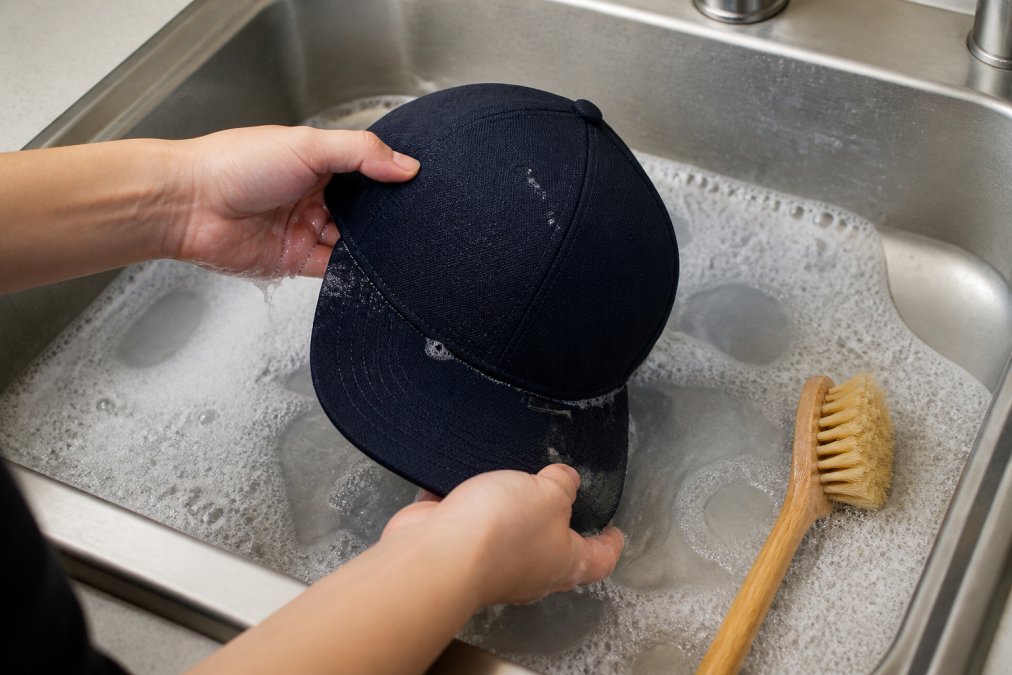
Step 5: Rinse thoroughly with cold water. Drain soapy water and rinse under cold running water until the water runs clear and no soap residue remains.
Step 6: Remove excess water gently. Don't wring or squeeze. Press gently between your hands, then lay on a clean microfiber cloth and roll it up to absorb moisture.
Step 7: Reshape and air dry. Place the damp cap on a hat form or stuff the crown loosely with clean, dry towels. Position where it can air dry naturally, away from direct sunlight, heat sources, or fans.
Machine Washing Precautions and Safe Settings
Some sports caps can tolerate machine washing, but it requires specific precautions. Machine washing isn't recommended for premium caps or those with delicate embroidery, but basic athletic caps made from sturdy polyester may be acceptable if done correctly.

Place the cap inside a mesh laundry bag before machine washing. This protects the cap from agitation while allowing water and detergent to reach the fabric.
Use the delicate cycle exclusively with cold water. Select low or no spin if available. Add only a small amount of mild detergent.
Never machine wash caps with plastic bills or embroidery. The agitation can damage these elements. If your cap has either, hand wash only.
Remove the cap immediately after washing. Reshape and air dry using the same method as hand washing.
Most quality sports caps are designed for hand washing. The extra care extends the cap's lifespan significantly.
How to Reshape a Baseball Cap After Cleaning
Reshaping is critical after cleaning. Many people do everything right through washing and drying, then skip reshaping and end up with a misshapen cap.
Place the cap on a hat form or block while still damp. A hat form is a plastic or wooden mold shaped like a cap's crown and bill. If unavailable, stuff the crown with clean, dry towels rolled to match the cap's original form.
Position the bill to maintain its natural curve, gentle downward, not flat or excessively curved. Gently adjust while damp, as fabric is more pliable when wet and will hold the shape as it dries.
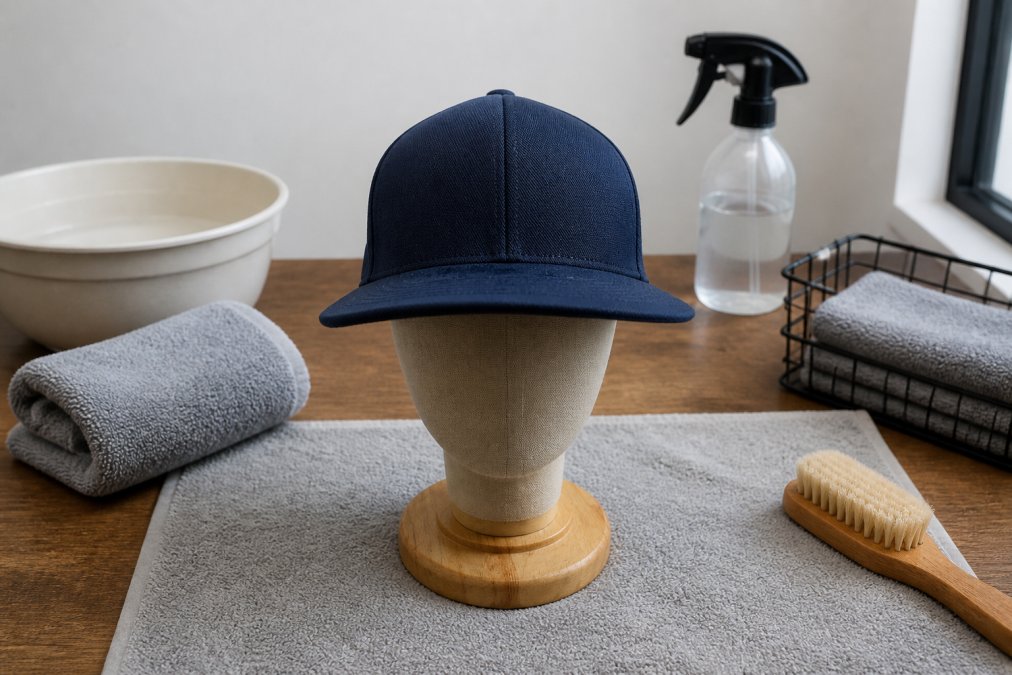
For embroidered logos, ensure the crown sits properly centered on the form. Leave the cap on the form for the entire drying period, typically 12-24 hours. Don't remove early.
If the bill has become wavy, gently press it flat against a hard surface or between pages of a heavy book while damp. This works better on buckram bills than plastic ones.
Best Hat Cleaning Kit and Drying Techniques
A dedicated hat cleaning kit simplifies the process. The essentials are a soft-bristled brush, microfiber cloths, mild detergent, and a hat form. A spray bottle for spot cleaning is also useful. Quality hat forms cost $10-25 and last indefinitely.
For drying, air circulation is more important than any specific technique. Position your cap in a location with gentle, consistent airflow, not directly in front of a fan. A bathroom shelf with the door open or a bedroom corner with a window cracked slightly works well.
Never use a hair dryer, even on low heat. Never place a cap in direct sunlight for extended periods. UV exposure fades colors and can make fabric brittle.
The drying location should have moderate humidity, around 40-60%. Drying time varies by material: cotton caps typically dry within 12-18 hours, polyester within 8-12 hours, and wool blends may take 24 hours or longer. Don't rush by applying heat.
Once dry, store in a cool, dry place. Avoid plastic storage bags, which trap moisture. Instead, store on a shelf or in an open container where air circulates. If stacking multiple caps, place tissue paper between them to prevent color transfer.
Long-Term Storage and Odor Prevention
Proper storage extends your cap's lifespan and prevents odors. Store caps in a location with stable temperature and humidity. Avoid attics, basements, or moisture-prone areas. A closet shelf or bedroom storage works well.
If worn frequently, store on a hat rack where air circulates. For long-term storage of infrequently worn caps, place on hat forms or stuff the crown with acid-free tissue paper. Never store compressed; creases set permanently.
Odor prevention starts with regular cleaning. Sprinkle baking soda inside the sweatband of a clean, dry cap and let sit overnight, then shake out. For caps with persistent odors, soak in equal parts white vinegar and water for 30 minutes, then rinse and dry completely.
Never use perfume, cologne, or air freshener sprays. Baking soda and vinegar are your only odor-fighting tools.
The Vault's premium sports caps are built to last years with proper care. Investing in correct cleaning and storage methods protects your investment and keeps your favorite caps looking fresh and ready to wear.
Proper cap care isn't complicated but requires attention to detail. Your sports cap represents team loyalty and personal style, it deserves the same care you'd give any quality apparel. By understanding your cap's material, using the right cleaning methods, and storing it correctly, you'll maintain its appearance and structure for years. Explore The Vault's curated collection of premium sports caps and apply these care techniques to keep them in game-day condition.
Frequently Asked Questions
Can you put a sports cap in the washing machine?
Yes, but only with caution. Use a delicate cycle with cold water and place the cap in a mesh laundry bag to minimize agitation. Never use hot water or a regular cycle, as these can damage the fabric, deform the brim, and fade colors. Machine washing works best for cotton caps; performance fabrics like Nike's Dri-FIT or Under Armour's HeatGear benefit more from hand washing to preserve their moisture-wicking properties and structural integrity.
What is the best way to remove sweat stains from a hat?
For fresh sweat stains and salt rings, soak the affected area in a solution of equal parts white vinegar and cold water for 30 minutes, then gently scrub with a soft-bristled brush. For stubborn stains, make a paste of baking soda and water, apply directly to the stain, let sit for 2 hours, then rinse. Avoid bleach, which can damage fabric and cause discoloration. Always test any solution on an inconspicuous area first to check for colorfastness.
How do I dry a sports cap after washing it without losing its shape?
Air dry your cap completely, never use a dryer. Place it on a hat form, baseball cap rack, or stuff the crown gently with paper towels to maintain shape while it dries. Position it in a well-ventilated area away from direct sunlight and heat sources. This process typically takes 24-48 hours. Ensure good air circulation around the brim and crown to prevent odors and bacteria growth during drying.
Are there specific cleaning methods for wool versus cotton caps?
Cotton caps are more durable and tolerate both hand and gentle machine washing. Wool caps require hand washing only in cool water with a wool-specific detergent to prevent shrinking and fiber damage. For either material, use mild detergent and avoid hot water, which can cause deforming and color fading. Always check the manufacturer's care label, as performance fabrics like Dri-FIT have their own requirements to maintain moisture-wicking properties.
This article was written using GrandRanker