
Table of Contents
- Start With a Base Layer That Manages Sweat
- Football Game Layering Tips for the Stands
- Cold Weather Game Day Essentials You Cannot Forget
- Best Shoes for a Cold Football Game
- How to Stay Warm at a Football Game When You Are Seated for Hours
- Rain, Snow, and Wind: Adjusting Your Outfit for Each Condition
- Stadium Rules, Packing Checklist, and Temperature Guide
- Frequently Asked Questions
Last Updated: October 8, 2026
Start With a Base Layer That Manages Sweat
The base layer is the most important piece of a cold weather football outfit, and most fans get it wrong.
For a cold weather football game, start with a base layer made from polyester or a wool blend. Skip the cotton t-shirt underneath.
Here is the order that works:
- Base layer: thermal shirt or turtleneck, fitted but not tight
- Mid-layer: fleece or sweater for insulation
- Outer layer: parka, puffer, or windproof shell
The rule is simple: dress in layers, not one heavy coat. You can remove a layer if the sun comes out.
Football Game Layering Tips for the Stands
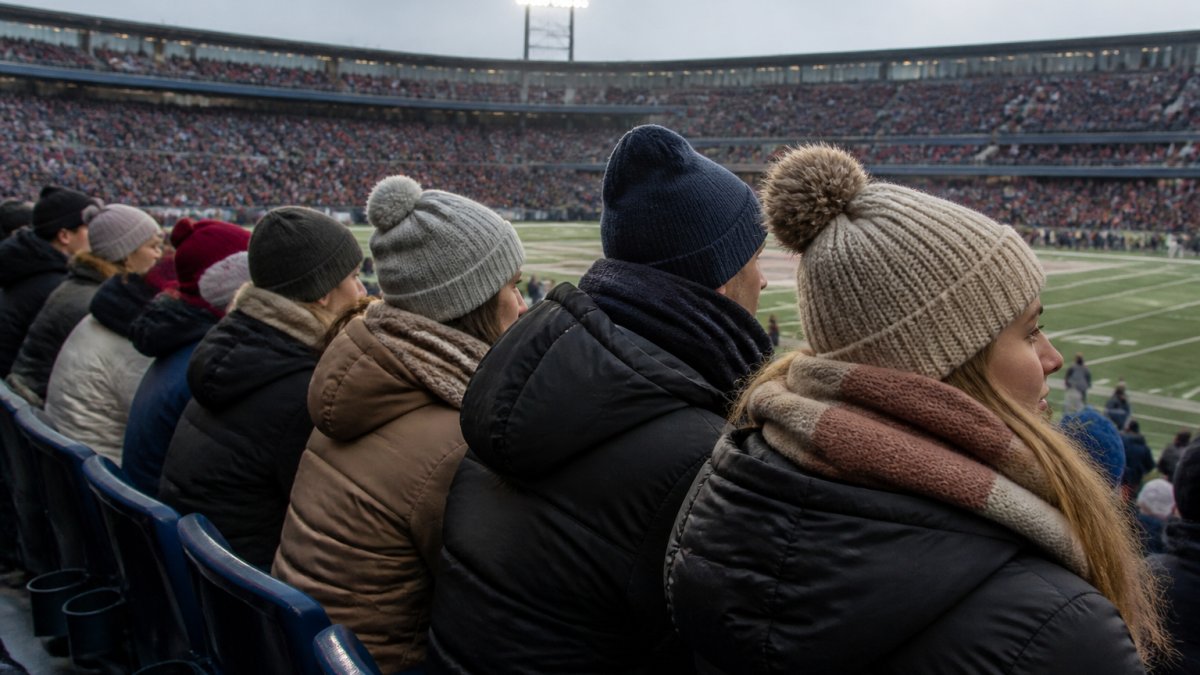
Layering is the difference between a comfortable three hours and a miserable one. Stadium seating keeps you still for long stretches, and your body produces far less heat than it does walking around.
Mid-Layers: Fleece, Sweaters, and the Turtleneck Trick
Fleece and wool sweaters are the workhorses of a cold-weather game day outfit. They hold warmth without much bulk, so they fit under a coat without making you look like a snowman.
Our pick from our own collection is the New Era NFL Cable Knit Pom Beanie for the head, but for the torso, stick to fleece or a thick knit.

Outer Layer: Parka, Puffer, and Windproof Shells
Your outer layer blocks wind and holds in heat. A parka or puffer jacket handles dry cold well. For windy games, a windproof shell on top makes a bigger difference than extra thickness underneath.

The Tommy Hilfiger Quilted Puffer Jacket uses faux down insulation to block cold and packs into its own bag, which helps if the weather shifts mid-game.
Cold Weather Game Day Essentials You Cannot Forget
Think of the small items as the parts that decide whether you enjoy the game. A great coat with no hat and no gloves still leaves you cold. Heat escapes fastest from your head, hands, and feet, so those three get first priority.
Pack these before you leave:
- Beanie or knit hat with ear coverage
- Scarf or neck gaiter
- Gloves or mittens
- Thermal socks and insulated boots
- Hand warmers for your pockets
Head, Hands, and Feet: Where Heat Escapes First
A beanie does more for your comfort than almost any other item. It covers your ears, which is where wind chill hits hardest. A cuffed knit hat with a fleece lining seals in warmth and stays put when you stand up to cheer.
The New Era Houston Texans Sport Knit Beanie has a soft fleece-style interior lining and an embroidered team patch, so it covers function and team spirit in one piece.
Best Shoes for a Cold Football Game
The best shoes for a cold football game are insulated, waterproof boots with room for thick socks, but the two features solve different problems, and confusing them is why so many fans still end up with numb toes.
Concrete and metal bleachers conduct heat away from your soles far faster than grass or pavement. That conduction is why thin sneakers fail even when the air temperature feels manageable.
Waterproof vs. Insulated: Pick Based on the Forecast
- Dry cold, no precipitation: Insulation matters most. A 200-gram to 400-gram insulated boot handles most dry game days. Waterproofing is a bonus, not a requirement.
- Rain or wet snow: Waterproofing matters most. A waterproof membrane keeps melted snow and rain from soaking the insulation, which would otherwise turn a warm boot into a cold, heavy one. Pair it with insulation if temperatures are near or below freezing.
- Both wet and cold: You need both, and you need them in the same boot. A waterproof shell over an uninsulated boot keeps you dry but not warm. An insulated boot without waterproofing keeps you warm until it gets wet, then keeps you cold.
A common pattern among longtime season-ticket holders is to own two pairs: a lighter insulated boot for dry cold and a fully waterproof insulated boot for slop. If you only buy one, buy the waterproof insulated pair, it covers more conditions.
Why Tight Boots Make Your Feet Colder
Boots that are too tight cut off circulation, and poor circulation means cold feet no matter how thick the sock.
New Era NFL Cable Knit Pom Beanie Sherpa Lined Winter Hat Gray Womens OS →
Size up half a step if you plan to double up on socks or wear a heavyweight wool sock. Leave roughly a thumb's width between your longest toe and the front of the boot. Your toes should be able to wiggle.
Sock Strategy
- Thermal socks or thick wool socks wick moisture and add a layer of insulation.
- Wool keeps insulating even when damp; cotton does not.
- Bring a spare pair. If your feet sweat on the walk in, changing socks at your seat resets the insulation.
- Avoid layering two thick socks inside a snug boot, that is the fastest route to restricted circulation.
How to Stay Warm at a Football Game When You Are Seated for Hours
Staying warm while seated comes down to blocking wind and keeping your core insulated. You are not generating much body heat when you sit still, so your clothing has to do all the work.
Try these moves:
- Sit on a foam cushion or folded blanket to block cold from the seat
- Tuck your hands into your pockets or a muff
- Stand and move during timeouts and halftime
- Bring a blanket for your legs, even with warm pants
Fleece-lined pants or flannel-lined jeans beat regular denim, which offers almost no insulation. Add a second pair of thermal socks if the forecast drops below freezing.
Rain, Snow, and Wind: Adjusting Your Outfit for Each Condition
Rain, snow, and wind each demand a different adjustment. Treat them as separate problems, because the fix for one does not solve the others.
| Condition | Main Problem | What to Add |
|---|---|---|
| Cold rain | Wet clothing | Waterproof shell, waterproof boots |
| Snow | Melted moisture | Waterproof outer layer, warm socks |
| Wind | Wind chill | Windproof shell, scarf, ear coverage |
| Dry cold | Heat loss | Extra mid-layer, insulated boots |
For cold rain, a waterproof jacket and waterproof boots matter more than thickness. For snow, keep the same waterproof layer and add warm socks. For wind, a windproof shell cuts the chill that makes mild temperatures feel brutal.
Stadium Rules, Packing Checklist, and Temperature Guide
Stadium rules vary by venue, and they decide what you can actually bring. Most stadiums follow clear-bag policies and limit what you can carry inside. Check your venue's rules before game day, since banned items and bag sizes differ from one stadium to the next. This is the part of cold-weather planning most guides skip, and it is the part that can leave your blanket, cushion, or hand warmers at the gate.
What Most Venues Allow and Restrict
- Bags: Clear plastic bags within a stated size limit are the common standard. Non-clear bags, backpacks, and large purses are typically prohibited. Some venues allow a small clutch in addition to the clear bag.
- Blankets: Often permitted if carried in, not in a bag. Some venues require them to be unfolded for inspection.
- Seat cushions: Usually allowed if they are single-seat and have no pockets, zippers, or compartments. Stadium seats with backs may be restricted.
- Hand warmers: Disposable and rechargeable warmers are commonly allowed, but rules vary. Rechargeable ones with lithium batteries may face extra scrutiny.
- Umbrellas: Frequently banned in seating areas because they block sightlines. A hooded waterproof shell is the safer choice.
- Outside food and drink: Generally prohibited beyond limited exceptions. Do not plan on bringing a thermos.
Because these rules change and differ by venue, confirm the current policy on your team's or stadium's official site in the days before the game. A quick check beats a walk back to the car.
Seat Dimensions and Why They Matter
Stadium seats are typically narrow, often around 18 to 21 inches wide in older venues, with some newer stadiums offering slightly more. That matters for cold-weather dressing because bulky layers and a thick coat can make an already tight seat uncomfortable, and a large seat cushion may not fit.
Practical adjustments:
- Favor thin, warm layers over one bulky coat so you fit the seat without spilling into your neighbor's space.
- Choose a compact foam cushion rather than a full stadium seat with a back if space is tight.
- A blanket across your lap adds warmth without adding width at your hips.
Packing Checklist
- Base layer, mid-layer, and outer layer
- Beanie with ear coverage
- Scarf or neck gaiter
- Gloves or mittens
- Thermal socks plus a spare pair
- Insulated, waterproof boots
Temperature Guide
- 40s: base layer plus fleece, light gloves
- 30s: add a parka, beanie, and thermal socks
- 20s: add a windproof shell and mittens
- Below 20: add hand warmers and a blanket
For more on cold-weather safety, the CDC guidance on cold weather safety explains how wind chill and wet clothing raise your risk. The National Weather Service wind chill chart shows how fast exposed skin feels the cold. And the American Red Cross cold weather safety tips covers what to do if you start showing signs of frostbite.
A heated layer can help on the coldest days. The Arris Heated Jacket is windproof and waterproof, with carbon fiber heating panels and a battery that runs 4 to 15 hours depending on the setting. It has a USB port for charging your phone, which matters when you are streaming highlights in the stands.

Frequently Asked Questions
What should I wear to an NFL game on a cold day?
Start with a moisture-wicking base layer, add an insulating mid-layer like a fleece or sweater, and top it with a windproof, waterproof outer jacket. For your lower half, wear fleece-lined pants or flannel-lined jeans. Finish with a warm beanie, gloves or mittens, a scarf, and insulated waterproof boots. This combination keeps you warm whether you are sitting in the stands or walking to the stadium.
What temperature is too cold for football?
There is no exact cutoff for fans, but NFL games have been played in temperatures well below freezing. The bigger concern is wind chill, which can make 30°F feel like 10°F. If the wind chill drops below 0°F, limit exposed skin and plan for extra layers. For your own comfort, anything under 40°F with wind requires full winter gear, including a hat, gloves, and insulated boots.
How should I layer clothes for a cold football game?
Use three layers: a base layer (thermal shirt or turtleneck) to wick sweat, a mid-layer (fleece or sweater) to trap heat, and an outer layer (parka or puffer jacket) to block wind and rain. Avoid cotton against your skin because it holds moisture. Add a hat, scarf, and gloves, and bring a packable rain shell in case conditions change. You can always remove a layer if you get too warm.
What shoes are best for a cold, wet football game?
Insulated, waterproof boots with a thick rubber sole and thermal socks are your best bet. They keep your feet dry and block cold from the ground. If you prefer sneakers, choose waterproof models and pair them with thick wool socks. Avoid thin canvas shoes or any footwear that soaks up moisture. A little extra room in the toe box helps circulation and keeps toes warmer.
Cold weather does not have to keep you on the couch. The right layers, warm footwear, and a few small essentials turn a freezing afternoon into a great game day. At The Vault, we stock premium team headwear with free, same-day shipping, a wide selection of sports-themed hats, and collections for both men and women. Get started with The Vault and show your team spirit while you stay warm.