
Table of Contents
- Step 1: Know Your Body and Your Activity
- Step 2: Choose Moisture-Wicking Fabrics for Women
- Step 3: How to Choose the Right Sports Bra Size
- Step 4: Look for Stretch, Seams, and Construction
- Step 5: Find the Best Sports Apparel for Game Day
- Common Mistakes to Avoid When Buying Women's Sports Apparel
- Conclusion
- Frequently Asked Questions
Last Updated: October 3, 2026
Step 1: Know Your Body and Your Activity
Comfortable women's sports apparel starts with one question: what are you actually doing in it? A bra built for marathon training will feel like overkill in a yoga class. Gear made for gentle stretching won't hold up during a spin session. Matching the piece to the workout matters more than any brand name.
Start by sorting your activities into two buckets.
- Low-impact: yoga, pilates, barre, walking, golf, watching a game from the stands
- High-impact: running, HIIT, spin, cross training, boxing
Then think about fit. A supportive fit should feel snug but never tight. If you can slide two fingers under a band, that's about right. If it digs in or rides up, size up.
Cleveland Clinic guidance on choosing workout clothes
Low-Impact vs. High-Impact Support
Low-impact workouts need light support and free movement. High-impact workouts need compression and a locked-in feel. Wearing the wrong level is the fastest route to discomfort.
A light-support bra works well for yoga and pilates. Medium support handles gym sessions, cycling, and training. High-impact support belongs in running and jumping work. Get this one call right and everything else gets easier.

Step 2: Choose Moisture-Wicking Fabrics for Women
Moisture-wicking fabrics for women pull sweat away from your skin instead of soaking it up. That keeps you drier, cooler, and less prone to chafing.
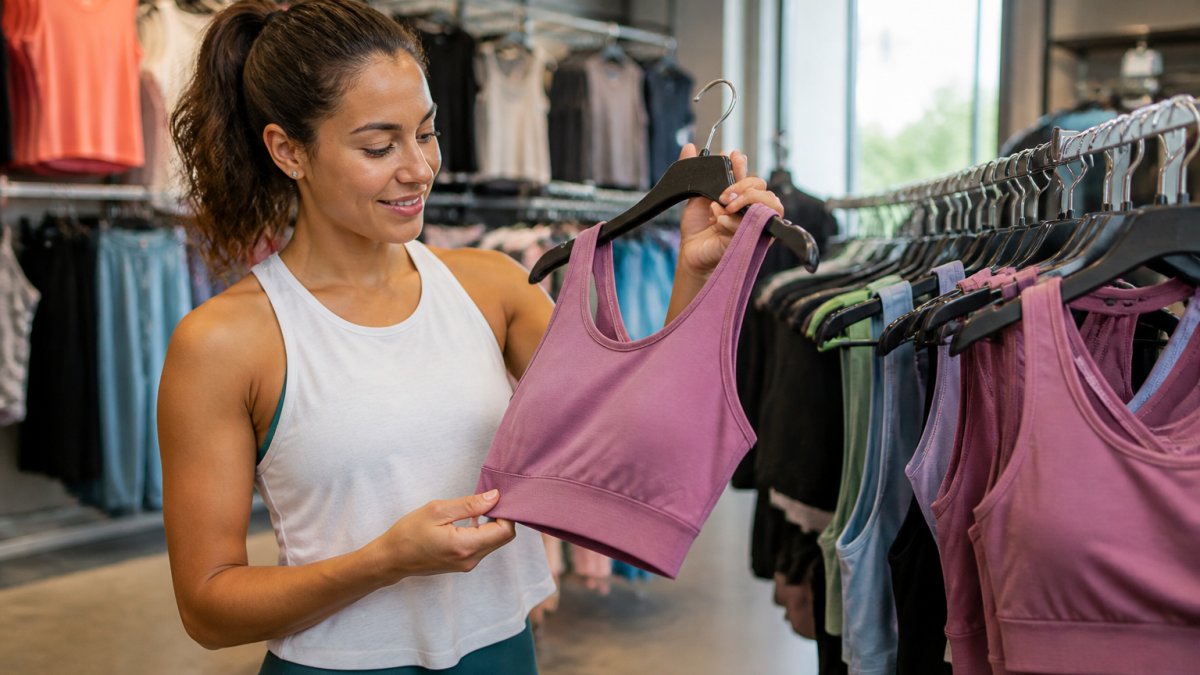
Look for these labels when you shop:
- Dri-FIT or sweat-wicking technology moves sweat to the surface, where it dries fast
- Mesh panels add airflow in high-sweat zones like the back
- Four-way stretch lets fabric move in every direction with you
- Breathable construction keeps air moving so you don't overheat
Fabric weight matters too. Lighter fabrics suit hot weather and intense workouts. Heavier technical textiles work for cooler conditions and layering.
Natural Fibers vs. Synthetic Blends
Synthetic blends win for sweaty workouts. Polyester, nylon, and spandex dry fast, stretch well, and hold their shape. Natural fibers like cotton and bamboo feel soft, but they trap moisture.
The best pick is often a blend. A little spandex adds stretch. A touch of mesh adds airflow. That mix gives you moisture management plus comfort.
Step 3: How to Choose the Right Sports Bra Size
Learning how to choose the right sports bra size comes down to two numbers: your band and your bust. Measure both, then match them to the brand's size chart. Guessing leads to bands that ride up and straps that dig in.

Most women wear a band that's too loose and cups that are too small. That combo causes bounce, rubbing, and shoulder strain.
Measure Your Band and Bust
Here's the two-step method:
- Band: Wrap a tape around your ribcage, right under your bust. Keep it level and snug. Round to the nearest even number.
- Bust: Measure around the fullest part of your chest, keeping the tape loose.
- Cup size: Subtract your band from your bust. Each inch equals one cup size.
Then check the fit in person or against the chart:
- The band should sit level and stay put when you raise your arms
- Straps should not dig into your shoulders
- The gusset and cups should lie flat with no gaping
Adjustable straps and elastic waistbands on bottoms help you fine-tune the fit. A wide underband adds stay-put security.
Why Your Size Changes From Brand to Brand
This is the part most size charts leave out: a 34C is not a universal 34C.
The fix is to treat your measurements as a starting point, not a final answer. Write down your band and bust numbers and keep them in your phone.
If you're between sizes, a common pattern is to size up in the band and down in the cup for high-impact support, and the reverse for low-impact comfort.
Pressure Points That Cause Discomfort
Even a correctly sized bra can hurt if the pressure is in the wrong places. Watch for these three zones:
- Underband: should distribute pressure evenly across the ribcage, not pinch at the center or dig under the bust
- Straps: should sit flat on the shoulder, not cut into the trapezius or slide toward the neck
- Side seams and underwires: should not press into the ribcage or armpit, especially during arm movement
If you have sensitive skin or sensory sensitivities, prioritize bras with covered underwires, bonded edges instead of elastic binding, and tagless neck labels. These construction choices matter as much as the size on the tag.
Nike Breath Sports Bra Strappy Racerback Light Support Yoga Green Womens L →
When to Re-Measure
Band and bust measurements drift with weight changes, hormonal shifts, and training cycles. A bra that fit perfectly six months ago may now sit differently. Re-measure any time a bra that used to feel good starts riding up, digging in, or leaving marks, those are fit signals, not fabric failures.
Step 4: Look for Stretch, Seams, and Construction
Good construction is what separates gear you wear once from gear you wear weekly. Check the seams first. Flatlock seams lie smooth against the skin and cut down on rubbing.
Next, test the stretch. Four-way stretch fabric moves with you in every direction. Bend, twist, and reach in the fitting room. If the fabric pulls or restricts, it's the wrong piece.
Seamless construction removes side seams entirely, which helps if you're prone to irritation. Ergonomic design puts the seams where they won't rub.
The Sensory-Friendly Checklist Nobody Talks About
If you have sensitive skin, eczema, or sensory processing differences, the standard "check the seams" advice isn't enough. Comfort for you is about texture, weight, and where the fabric touches your body, not just whether a seam is flat.
Run through this checklist before you buy:
- Tagless neck labels. Printed or heat-transfer labels eliminate the scratchy tag at the back of the neck, which is one of the most common sensory irritants in activewear.
- Bonded or laser-cut edges. These replace elastic binding at the armholes, neckline, and leg openings. They lie flatter and don't leave the ridge that elastic binding creates.
- Covered or absent underwires. Exposed underwire casings can press into the ribcage. Wireless compression bras with molded cups are often a better sensory fit.
- Smooth, low-pile fabric. Brushed fleece, ribbed knits, and heavy mesh can feel abrasive against bare skin. Flat, tightly knit performance fabrics tend to feel calmer.
- No interior pockets or liners that shift. Removable bra pads that bunch or fold are a frequent source of mid-workout irritation. Look for sewn-in or no-pad designs if this bothers you.
- Consistent compression. A waistband that's tight in one spot and loose in another creates uneven pressure. Look for wide, continuous bands rather than narrow elastic.
None of these features are marketed as "sensory-friendly" on most product pages, so you have to read the construction details and, when possible, feel the garment in person.

Fabric Weight, Texture, and How They Affect Comfort
Stretch and seams get most of the attention, but fabric weight and texture drive how a piece feels after 30 minutes of wear.
Texture matters too. A smooth, slick surface glides over the skin; a brushed or peached surface feels softer at first touch but can pill and trap heat. Neither is universally better, the right choice depends on whether you prioritize coolness, softness, or durability.
Durability: What to Check Before You Commit
Construction quality shows up in the details:
- Stitching density. Dense, even stitching along stress points (underarms, crotch, waistband) resists blowouts.
- Reinforced gussets. A gusset in shorts and leggings improves both comfort and longevity.
- Fabric recovery. Stretch the fabric and let go. If it snaps back to shape, it will hold up. If it stays stretched, it will bag out after a few washes.
- Colorfastness. Dark, saturated colors on cheap synthetic blends can bleed in the wash. Check care labels for cold-wash recommendations.
Step 5: Find the Best Sports Apparel for Game Day
The best sports apparel for game day balances comfort with team spirit. You want gear that looks sharp in the stands and feels good for hours of sitting, cheering, and walking.
Build a simple layering system:
- Base layer: a moisture-wicking tee or tank that keeps you dry
- Mid layer: a light hoodie or long-sleeve top for cooler stadiums
- Outer layer: a jacket or cap you can shed when the sun comes out
A team cap finishes the look and shades your face. At The Vault, we carry sports-themed headwear and apparel for fans of various leagues, with free, same-day shipping. Our collections for both men and women make it easy to match your fit to your team.
Common Mistakes to Avoid When Buying Women's Sports Apparel
The biggest mistake is buying for looks alone. A cute set that chafes or rides up won't get worn twice. Comfort has to come first, and style can follow.
Other common slip-ups:
- Skipping the size chart. Sizing varies by brand, so always measure before you order.
- Choosing cotton for sweaty workouts. It holds moisture and feels heavy fast.
- Ignoring activity level. Light support in a running bra leads to bounce and strain.
- Overlooking seams. Rough seams cause chafing that ruins an otherwise good piece.
- Forgetting the fit test. Always move, stretch, and raise your arms before you commit.
Conclusion
Finding women's sports apparel that truly feels good takes a few smart steps, not a big budget. Measure your size, match support to your activity, and check the fabric and seams before you buy. Do that, and every workout and game day gets more comfortable.
Frequently Asked Questions
What fabric is best for comfortable women's sports apparel?
Moisture-wicking synthetic blends like polyester and spandex are best for keeping you dry during workouts. They pull sweat away from your skin and dry quickly. Natural fibers like cotton feel soft but hold moisture, which can cause chafing. Look for fabrics with four-way stretch and breathable mesh panels for airflow. For game day, a cotton-poly blend offers comfort and team spirit.
How should sports apparel fit for maximum comfort?
It should feel snug but not restrictive. Check that you can raise your arms, twist, and squat without the fabric digging in or riding up. Elastic waistbands should sit flat without rolling. For sports bras, the band should be level all around and you should be able to fit two fingers under it. Always try the garment through its full range of motion before buying.
What features make women's game day apparel more comfortable?
Look for breathable fabrics, flatlock seams that reduce chafing, and a bit of stretch for movement. Moisture-wicking properties help if you're active or in warm stadiums. A supportive fit that doesn't compress too much is key. For caps, adjustable closures or stretch-fit bands prevent headaches. Choose styles that match your activity level and the weather.
How do I choose the right sports bra for comfort and support?
Start by measuring your band and bust size. Match support level to activity: light support for yoga, medium for cycling, high for running. Look for wide straps and a wide underband for stability. Removable cups add shape. Moisture-wicking fabrics and mesh panels keep you cool. Try on multiple sizes and move around to test fit.
Comfort and team spirit shouldn't be a trade-off. The Vault makes it easy with a curated selection of premium sports headwear and apparel for men and women. Enjoy free, same-day shipping and a seamless shopping experience that gets your gear to your door fast. Get started with The Vault and show your team pride in gear that fits right.