
Table of Contents
- Quick Pre-Purchase Checklist: 8 Red Flags of Fake Sports Caps
- Stitching, Embroidery Quality, and Logo Symmetry
- Holograms, Serial Numbers, and Authentication Stickers
- New Era Cap Authentication Guide: Interior Tags, Seam Tape, and Eyelets
- Material Texture, Fabric Weight, and Under-Brim Color
- Price-to-Authenticity Risk Assessment and Regional Manufacturing Variations
- Where to Buy Authentic Sports Caps (and How to Avoid Reseller Traps)
- Conclusion: Your Next Steps to Buying with Confidence
- Frequently Asked Questions
Last Updated: September 14, 2026
Quick Pre-Purchase Checklist: 8 Red Flags of Fake Sports Caps
Learning how to spot fake sports caps takes about 60 seconds once you know where to look. Counterfeit caps have flooded the secondary market, and most buyers only discover the problem after the hat arrives. This guide from The Vault breaks down the physical tells that separate authentic merchandise from convincing fakes.
Here is the fast version. Run through these eight red flags before you pay:
- Stitching looks loose or uneven across the front logo
- Embroidery has thread gaps or raised, lumpy edges
- Logo is off-center or tilted on the front panel
- Hologram sticker is missing, peeling, or blurry
- Serial number doesn't match the tag or scans to nothing
- Interior seam tape is absent or printed with the wrong branding
- Fabric feels thin and synthetic compared to a licensed product
- Price is far below retail with no explanation
Two or more of these together usually means counterfeit. One alone can be a manufacturing defect, which is different from a fake.
Stitching, Embroidery Quality, and Logo Symmetry
Embroidery quality is the single fastest way to separate authentic caps from counterfeit ones. Genuine caps use dense, consistent stitching with clean edges. Fakes cut corners on thread count, and it shows up close.
Hold the cap under good light and check the logo from a few inches away.
- Thread count: Authentic embroidery packs threads tightly with no fabric showing through. Counterfeits leave visible gaps or thin patches.
- Frayed edges: Loose, fuzzy thread ends around the logo letters signal poor quality control.
- Misspellings: Check every letter. Counterfeit manufacturers frequently swap letters or drop characters in team names.
- Logo symmetry: Fold the cap in half. The logo should sit dead center. A tilted or shifted logo is a strong tell.
Thread Count, Frayed Edges, and Misspellings
Thread density varies by manufacturer and design, so compare against a known authentic cap of the same model when you can. Frayed edges and misspellings, though, are near-certain signs of a counterfeit. Official merchandise goes through quality control that catches these errors before shipping.
Panel Alignment and Crown Structure
The crown is the structured front of the cap. On an authentic cap, the panels meet in clean, straight seams. On a fake, panels often pucker or overlap unevenly. Run your thumb along the seams. Any bumpiness or misalignment points to a counterfeit build.
Holograms, Serial Numbers, and Authentication Stickers
Authentication stickers are the hardest feature to fake well. Genuine caps carry a hologram sticker, usually under the brim or on the interior tag, that shifts color and shows a clear 3D image when you tilt it. Counterfeit holograms look flat, blurry, or peel off at the corner.
The serial number is your second checkpoint. Every authentic cap has a unique number printed on the sticker or tag. If two caps from the same seller share a number, both are fake.
QR Code and Serial Number Verification Tools
Some manufacturers now print QR codes that link to a verification page. Scan the code with your phone before buying. A code that leads to a dead page, a generic homepage, or a mismatched product is a counterfeit. This is one of the fastest checks available and most buyers skip it entirely.
U.S. Customs and Border Protection guidance on counterfeit goods
New Era Cap Authentication Guide: Interior Tags, Seam Tape, and Eyelets
The interior tells the truth. A New Era cap authentication guide always starts inside the hat, because that is where counterfeiters cut the most corners. Flip the cap over and examine the tags, tape, and hardware.

Size Tags, Wash Tags, and Manufacturing Details
Authentic size tags are woven, not printed, and the text is crisp. Check the wash tag for country of origin and care instructions. Counterfeits often print tags on cheap paper that fades or smears. Seam tape should run along the interior seams with clean branding. Missing tape or tape with the wrong logo is a red flag.
Eyelets, the small metal rings on the crown, should be set evenly and flush. Loose, crooked, or plastic eyelets signal a fake.
Material Texture, Fabric Weight, and Under-Brim Color
Fabric is where a fake gives itself away before you ever check a tag. Authentic caps are built from denser cotton twill, brushed cotton, or performance polyester blends, and the difference is measurable with your hands and eyes, not just a vague "feel."
Start with weight and drape. Hold the cap by the back strap and let the crown hang. An authentic cap holds a structured shape and resists collapsing; a counterfeit made from thin synthetic fabric flops and creases easily. Squeeze a panel between your thumb and forefinger. Genuine twill feels tightly woven with a faint diagonal grain you can see under raking light. Fakes feel slick, slick-smooth, or almost papery, and often have a slight plastic sheen.
Next, check the under-brim. This is the underside of the visor, and it is one of the most reliable tells because counterfeiters rarely match it correctly.
- Color match: On authentic caps, the under-brim color follows the design spec, often a contrasting team color, a dark neutral, or a tonal shade. Fakes frequently use the wrong shade, a muddy approximation, or a color that does not appear anywhere else on the cap.
- Fabric continuity: The under-brim should use the same quality of fabric as the crown. A shiny, thin, or plasticky under-brim on an otherwise matte cap is a red flag.
- Color bleed: Dampen a cotton swab and rub a hidden corner of the under-brim. Cheap dye on counterfeit fabric can transfer color. Authentic dye is set and should not smear.
- Stitching at the brim edge: The visor edge should have tight, even rows of stitching. Loose or skipped stitches along the curve point to a counterfeit build.
Use the table below as a side-by-side field test. It is written so you can run it on a cap in your hand, not just read it.
| Field Test | Authentic Cap | Counterfeit Cap |
|---|---|---|
| Drape test (hold by back strap) | Holds structured shape | Flops, creases easily |
| Panel squeeze | Tight diagonal twill grain | Slick, papery, plastic sheen |
| Under-brim color | Matches design spec exactly | Wrong shade or muddy approximation |
| Damp swab test | No dye transfer | Dye can smear or transfer |
| Brim edge stitching | Tight, even rows | Loose or skipped stitches |
| Eyelets | Metal, flush-set | Plastic, crooked, or loose |
Fabric weight also affects how the cap ages. Authentic cotton twill softens and conforms to your head over time. Thin synthetic counterfeits tend to pill, crack at the fold lines, and lose shape after a few wears. If a "new" cap already looks broken-in or has creases that will not relax, treat it as suspect.
Price-to-Authenticity Risk Assessment and Regional Manufacturing Variations
Price is a signal, not proof. The more useful skill is reading seller behavior alongside the price, because counterfeiters price caps just low enough to feel like a deal without triggering suspicion. Run this risk assessment before you pay, and treat any two high-risk signals together as a reason to walk away.
Seller-behavior risk signals
- Far below retail with no explanation: high risk. A current-season cap at a steep discount usually means either a fake or a stolen-goods story you do not want to be part of.
- Slightly below retail from a verified seller with a return policy: low risk. Small discounts are normal for clearance, last-season stock, or bulk buying.
- "Limited edition" at a discount: verify the serial number and hologram before buying. Limited runs are the most counterfeited category.
- Bulk listings of the same rare cap: almost always fake. Genuine limited caps do not appear in quantity from one seller.
- Stock photos only, no interior shots: high risk. Resellers who hide the interior are hiding the authentication details.
- Pressure to pay outside normal checkout: high risk. Off-platform payment removes your buyer protection and is a classic counterfeit tactic.
- No return policy or "all sales final": high risk. Legitimate sellers stand behind their merchandise.
- New account with a short history and a large inventory: moderate risk. Check feedback patterns, not just the star rating.
Regional manufacturing variations
Caps made for different markets can legitimately differ in tag format, language, sizing conventions, and even materials. A cap produced for one country's market may carry a different size tag layout or care-label wording than the same model sold elsewhere. Counterfeiters exploit this by explaining away inconsistencies as "regional variation."
The way to separate real variation from a cover story is to run the checks that do not vary: stitching density, embroidery quality, hologram behavior, serial number uniqueness, and interior seam tape branding. Legitimate regional variation still passes those checks. Fakes fail at least one of them, usually the serial number or the hologram.
Verification tools to use before you buy
- QR codes: Some manufacturers print QR codes that link to a verification page. Scan with your phone. A code that leads to a dead page, a generic homepage, or a product that does not match the cap is a counterfeit.
- Serial number lookup: Where a manufacturer offers an online lookup, enter the serial number and confirm the model matches. If two caps from the same seller share a number, both are fake.
- Hologram tilt test: Tilt the sticker under light. Authentic holograms shift color and show a clear 3D image. Counterfeit holograms look flat, blurry, or peel at the corner.
- Barcode and hangtag match: The hangtag barcode should match the cap's branding and model. A mismatch is a red flag.
U.S. Customs and Border Protection guidance on counterfeit goods
A practical rule: if the price is more than a modest discount off retail and the seller will not answer basic authentication questions, the cap is not worth the gamble. The two minutes you spend verifying are cheaper than the cap you cannot return.
Where to Buy Authentic Sports Caps (and How to Avoid Reseller Traps)
The safest path is buying from a seller who verifies authenticity and stands behind returns. Reseller traps include stock photos, no return policy, and pressure to pay outside normal checkout.
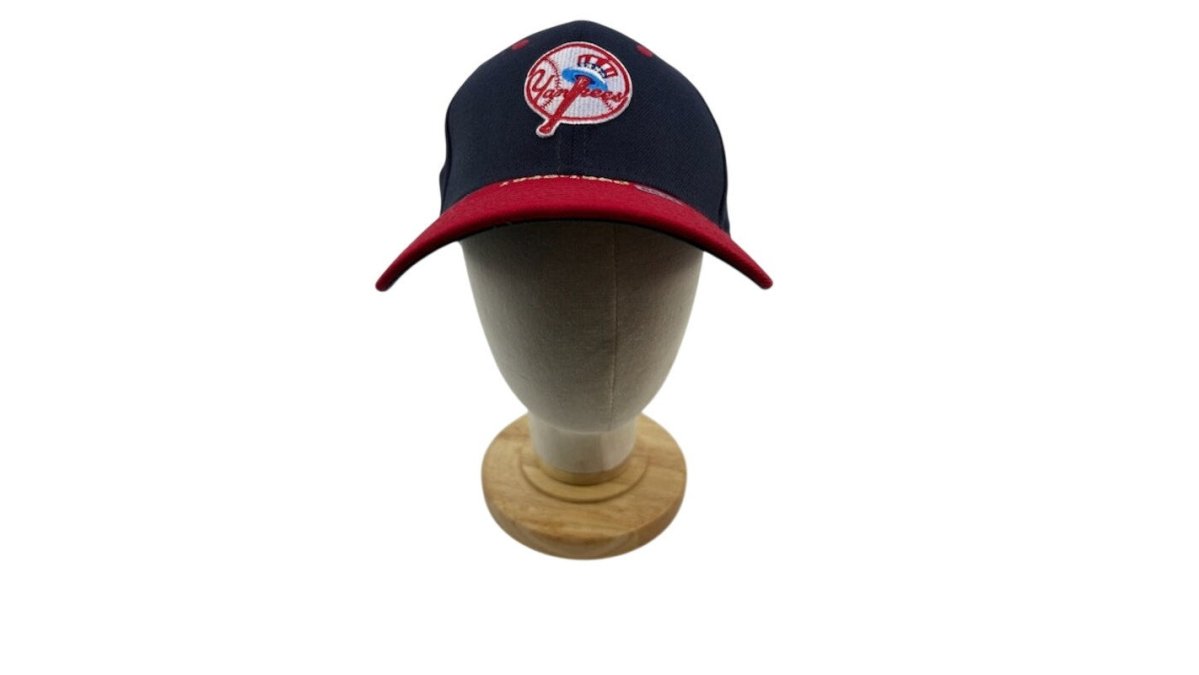
At The Vault, we offer a curated selection of premium headwear and apparel, specializing in sports-themed caps. We provide free, same-day shipping so you get your gear fast. Our selection spans team-specific headwear for men and women, including pieces like the New Era NY Yankees 1946-1980 39Thirty Cap and the Nike Air Jordan Wings Logo Snapback.

Federal Trade Commission guidance on online shopping and returns
Conclusion: Your Next Steps to Buying with Confidence
Counterfeit caps cost buyers money and erode trust in the secondary market. The checks in this guide take under two minutes and catch the vast majority of fakes before you pay.
The Vault makes that process simple with a curated selection of authentic sports headwear, free same-day shipping, and collections built for both men and women. Get started with The Vault and buy your next cap with confidence.
Frequently Asked Questions
How do I know if my MLB cap is original?
Check the interior tags for a woven label with the MLB logo and a serial number. Authentic caps have clean embroidery with no loose threads, symmetrical logo placement, and a hologram sticker on the brim. The under-brim should match the team's official color. If the price is far below retail or the seller only shows stock photos, it's likely a fake sports cap.
How to tell if a Nike hat is real?
Look for the Nike swoosh embroidery: it should be tight, with no connecting threads between letters. Check the inside tag for a style code and a production date. Authentic Nike caps have a consistent fabric weight and a branded taping over the seams. Counterfeits often have misspelled 'Nike' or a swoosh that is too thick or thin.
How to tell if a hat has a cardboard or plastic brim?
Genuine sports caps use a plastic brim that flexes without cracking. Cardboard brims feel stiff and may crease permanently. To test, gently bend the brim: plastic returns to shape, cardboard stays bent. Also, authentic caps have a smooth, covered under-brim; counterfeit versions often show exposed cardboard edges or uneven stitching.
How to know if adidas cap is original or fake?
Inspect the adidas logo: the three stripes should be evenly spaced and cleanly embroidered. Check the interior for a woven tag with the adidas name and a size indicator. Fake caps often have a glued-on label instead of a woven one. The fabric should feel like a performance blend, not thin synthetic material. Look for a serial number inside the crown.
What are the signs of a low-quality counterfeit sports cap?
Common signs include frayed embroidery edges, misspelled team names, crooked logo placement, and a chemical smell from synthetic materials. The cap may have a cardboard brim instead of plastic, and the interior tags are often printed rather than woven. Stitching may be loose or uneven, and the cap lacks a hologram or serial number for verification.
Do authentic sports caps have specific interior tags?
Yes, authentic caps from brands like New Era, Nike, and adidas include woven tags with the brand name, size, country of manufacture, and a style code. New Era caps also have a distinctive seam tape with the brand logo and a hologram sticker on the brim. Counterfeits often use printed or glued labels that peel off easily.
Where can I buy authentic sports caps online?
Buy from official brand websites, licensed retailers like The Vault, or team pro shops. The Vault offers a curated selection of premium sports caps with free same-day shipping. Avoid third-party marketplaces with prices far below retail, and always check for authentication features like holograms and serial numbers before purchasing.
Buying authentic sports caps does not have to be a gamble. The Vault offers a curated selection of premium team headwear, free same-day shipping, and a range of collections for men and women so you can find the right fit without the risk. Get started with The Vault and skip the counterfeit traps entirely.